
I do not spend my evenings arguing about whether artificial intelligence will replace half the workforce or usher in a new age of leisure. I spend them testing one ordinary task at a time.
My name is Jamie Whitaker. I work in marketing and content at a mid-sized company in Chicago. During the day I write copy, revise headlines, organize research, prepare presentations, answer comments, and pull together weekly and monthly reports. I am not a programmer. I am not an industry analyst. After work I simply open a tool, give it a real job I need done, and watch what happens.
This site exists because most of the conversation about AI is either sales copy or speculation. Neither helps me finish a report before dinner.
The Problem With Talking About the Future
Grand claims leave ordinary work untouched
Predictions about the future of work sound impressive in a keynote. They rarely tell you how to turn a messy meeting transcript into notes people will actually read, or whether an expensive subscription will save you twenty minutes on a weekly report. The gap between the vision and the blank page is wide.
Hype creates pressure instead of clarity
Many articles frame AI adoption as urgent and inevitable. The message is often: learn this now or fall behind. That framing makes people feel behind before they have even tried a single practical task. It also encourages people to buy tools they have never stress-tested against real deadlines.
Speculation does not produce a usable draft
I have sat through enough discussions of what AI might do in five years. None of those discussions finished the competitor research summary I still had to write that night. Speculation is interesting. It is not a workflow.
What I Actually Do After Work
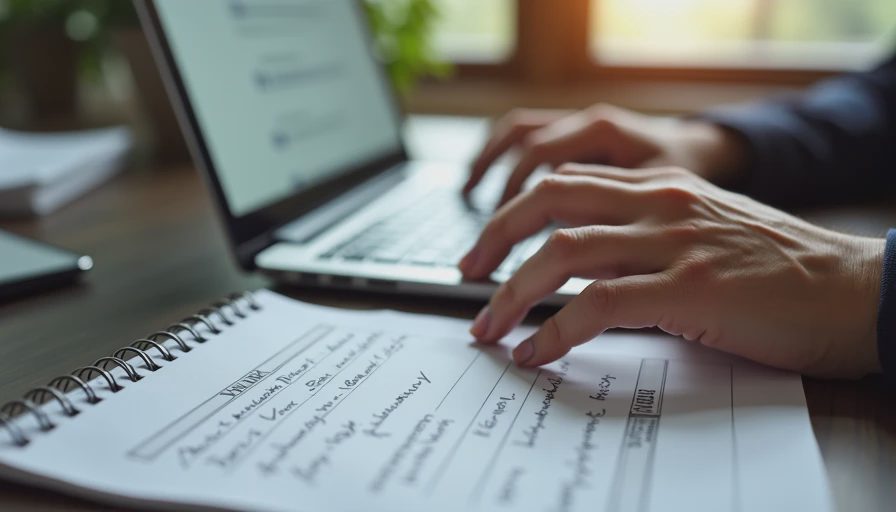
One task, one tool, one honest result
Most evenings I pick a single ordinary job: drafting a weekly report, cleaning up meeting notes, turning research notes into an outline, or planning a short weekend trip. I set a time limit. I record what the tool produced, what I still had to fix, and whether I would use it again for that specific purpose.
I keep the conditions ordinary
I use the same laptop and the same after-work attention span I have on a Tuesday night. I do not create laboratory conditions. If a tool only works when I give it perfectly clean input and unlimited revision rounds, that is useful information. It is also a limitation I will report.
Failure is still publishable
A tool that wastes an hour is still worth writing about if the write-up saves someone else the same hour. I would rather publish a clear “not worth it” than pretend every experiment ends in a breakthrough.
What Readers Can Expect From These Experiments
Concrete starting points
Every hands-on post will state the actual task I was trying to finish. No vague “productivity boost.” Just the job on the desk.
Transparent conditions
I will note the tool, the plan or version when it matters, the device, the input I gave it, and roughly how much time I spent. If the test is approximate, I will say so.
Visible human work
I will show what the tool produced and what still required judgment, editing, or fact-checking. The first draft may come from AI. The decision to keep, cut, or rewrite it does not.
Clear verdicts
I will say whether I kept the tool for that task, use it selectively, or cancelled the subscription. I will also name the limitation so readers know what not to expect.
Why This Approach Matters More Than Predictions
Real work is still full of judgment calls
AI can generate text quickly. It cannot decide which client detail should stay confidential, which statistic needs verification, or which tone will land with a specific audience. Those calls remain human. Pretending otherwise creates brittle workflows.
Small, tested improvements compound
Saving the worst twenty minutes of a weekly report is more useful than waiting for a system that promises to eliminate the entire report. The improvements I care about are the ones I can repeat next week under the same constraints.
Trust is built by showing the mess
Readers do not need another polished success story. They need to see the revision steps, the weak first outputs, and the moments when the tool added work instead of removing it. That is the information that helps someone decide whether to spend an afternoon—or a subscription fee—on a given approach.
A Simple Promise
I will keep testing tools the way a colleague would: after hours, on real tasks, with ordinary attention. I will report what helped, what needed fixing, and what was not worth the time.
I tried it so you don’t have to waste your afternoon.
That is the entire editorial brief. Everything else on this site—the workday experiments, the tool trials, the prompt patterns, the outside-the-office tests, and the honest debriefs—follows from it.


No notes yet — be the first to inscribe one.